Mold Removal in Old Towne, TX
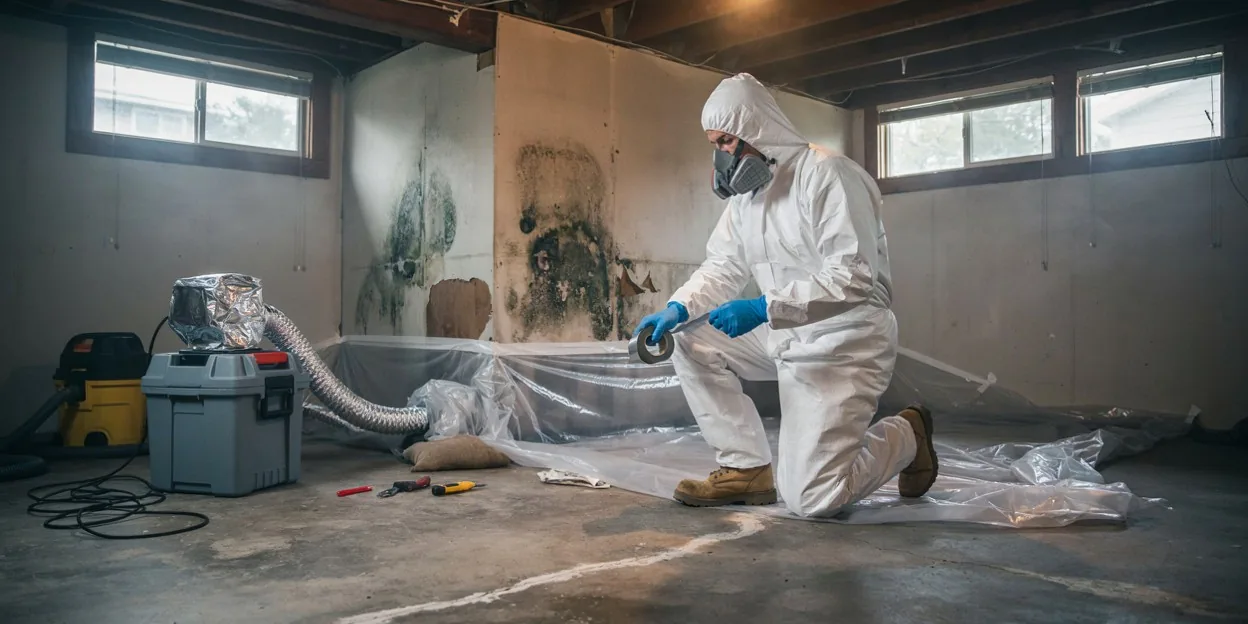
Old Towne is the band of 1950s and 1960s houses that wraps around downtown Plano, built in the years when the city went from a farm town of about 3,700 people in 1960 toward the suburb it became. The houses are small brick and frame ranches, some on pier-and-beam like their Victorian neighbors to the west and some on the first slabs poured in Plano, with galvanized or early copper supply lines, cast iron drains, single hall baths, and window units long since replaced by a central system squeezed into a closet.
Those first slabs have had sixty-five summers on the clay. Cast iron drains under them have rusted thin and cracked at the joints, and galvanized supply lines have narrowed and pinholed inside the walls. The hall bath, often the only one, has been through several wax rings and a vinyl floor or two. A damp closet floor, a soft spot at the toilet, and a smell in the kitchen pantry are the three calls Old Towne makes most.
An Old Towne homeowner who dials this number is connected to an independent local mold provider who meters the house and sets the scope. Our part is the call; the work and the agreement are between you and the provider.
Old Towne mold removal under a 1961 slab or over a crawl space
A soft hall floor at the toilet in a one-bath ranch is bathroom mold removal, with the flange and the cast iron drain checked first. A pantry wall that reads wet along the bottom is mold removal, traced to the slab line. A pier-and-beam house that smells musty after rain is mold odor removal, starting under the floor.
The downtown blocks next door
Old Towne's western streets run into the shops and the DART station that Downtown Plano rebuilt around after the 1990s, when the old business district was still a quiet remnant of the farm town these ranches were built to serve.
Call (972) 787-0657 and tell us what you see. We put you through to a local mold provider serving Old Towne.
Services Available in Old Towne
Mold Removal
Growth on drywall after a slab leak, a water heater, or a washer box let go: room sealed, wet board cut to the meter line, framing HEPA-cleaned and dried.
Black Mold Removal
A dark patch handled by how far the water traveled, not its color: containment up, porous material out, hard surfaces cleaned, the leak fixed before closing.
Whole-Home Mold Remediation
A slab leak that ran for months or a line that split in a freeze and soaked several rooms, mapped wall by wall and cleared in zones as one project.
HVAC Mold Cleaning
Coil, drain pan, and condensate line cleaned or replaced when the attic air handler sweats through a 100-degree Plano summer and drips into the ceiling below.
Bathroom Mold Removal
Growth behind a vanity, under a shower pan, or on a ceiling with a weak fan, removed after the supply line or the drain leak behind it is repaired.
Attic Mold Remediation
Growth on roof decking under hail-cracked shingles or around a sweating duct, cleaned and treated once the roof and the insulation are put right.
Mold Odor Removal
A musty smell in a house that looks fine, traced to the wet pad under the floor or the drywall behind a cabinet, then removed and treated.
Mold Damage Repair
Drywall, texture, baseboard, and cabinet bottoms put back after removal, once the slab reads dry and the plumber has fixed what started it.