Mold Odor Removal in Plano, TX
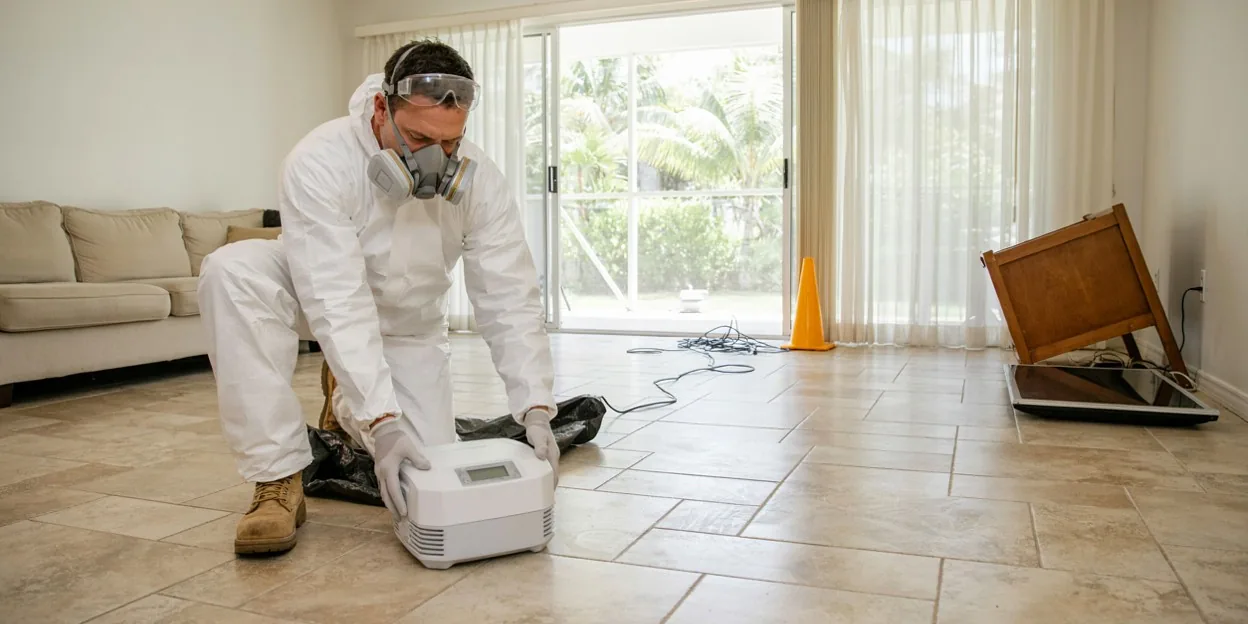
Nothing is stained. Nothing is soft, as far as you can tell. But when you come home in the evening and open the door, the house smells like a creek bed, and it is worst at the end of the hall near the kitchen pantry. Plug-ins mask it for an hour. Guests notice before you do now. This site connects you by phone with an independent local provider who does mold odor removal in Plano and across Collin County.
Following the smell to the wet thing behind it
The crew does not treat the air on the first visit. They follow the smell with a moisture meter, checking the pantry wall, the floor under the wood or laminate in the hall, the cabinet floors in the kitchen and the baths, the wall behind the water heater, and the closet under the attic unit. When a house smells but shows nothing, something wet is hiding behind a finished surface, and on a slab it is nearly always down low: the plate at the bottom of a wall, the back panel of a cabinet, or the foam pad under a floating floor.
In Plano the find is very often a slab leak. A copper line under the kitchen or a drain under the hall opened when the clay moved, and the water has been soaking the pad under the floor for months with nothing showing on top. A thermal camera finds that cold footprint in minutes.
Put the plug-ins away and start keeping notes
Stop masking the smell for a few days so you can tell where it lives. Note whether it is stronger in the morning or the evening, whether it changes when the air conditioning starts, and which room is worst. Open the doors under every sink and smell inside the cabinets.
Check the water meter at the curb with every fixture off; if the dial moves, a line under the house is running. Look at the water heater pan and the floor behind the washer. A plank that clicks underfoot or a seam that has started to lift tells the crew exactly where to start. Leave the floor in place until they arrive.
What usually turns up, what comes out, and what gets treated last
Typical Plano finds: a slab leak that soaked the pad under laminate in a hallway, a dishwasher line that wet the toe kick and the drywall behind the cabinets, a washer box that dripped inside the wall, or a condensate pan upstairs that overflowed into a closet ceiling and ran down inside the wall. Whatever is wet comes out behind plastic, the studs and plate get HEPA vacuumed and wiped, and the fans and dehumidifier stay until the readings are normal.
Only then does the odor work start: a HEPA scrubber runs in the space for several days, and the crew may wipe or fog the room with a product that breaks the smell down instead of covering it. A smell that comes only when the air runs is HVAC mold cleaning. Wet material found under a vanity or a shower pan is bathroom mold removal. The floor and wall going back is mold damage repair.
Floating floors over a slab, and a smell that peaks in September
Plano houses sit on slabs, and a lot of them have had the original carpet replaced with laminate or luxury vinyl plank floating over a thin foam pad. A slab leak or a dishwasher overflow that reaches that pad has nowhere to evaporate to, and the pad holds water for months while the floor looks new. The air conditioning spreads the result: a house sealed at 75 degrees from May into October, with the blower pulling air past every damp cavity, carries the smell to every room through the returns.
North Texas humidity makes the fall worse. September in Plano is still in the 90s with dew points in the 60s and 70s, so a wet cavity that might dry in a desert stays wet here until it is opened. Texas requires a TDLR mold remediation license when the growth found exceeds 25 contiguous square feet, and the remediator cannot be the one who tested the house if you had it tested. A slab leak repair by a plumber inside the city may need a permit through Plano's Building Inspections office, and a Texas policy treats a slow slab leak differently from a sudden one, so the plumber's report matters.
Calling about a smell with no stain in Plano
Have the address ready, name the room where the smell is strongest, and say roughly when you first noticed it. Tell them whether it changes when the air conditioning runs, whether the water meter moves with everything off, whether any floor has lifted, and whether you have had a leak fixed in the last year. Call (972) 787-0657.